Category: Economics
-
Maine economic development incentive programs questioned
The State of Maine has examined its economic development incentive programs and found them to be a bad deal for taxpayers.
-
Kauffman paper on local business incentive programs
The paper “Evaluating Firm-Specific Location Incentives: An Application to the Kansas PEAK Program,” from the Ewing Marion Kauffman Foundation introduces a proposed evaluation method and applies it to Promoting Employment Across Kansas (PEAK), one of that state’s primary incentive programs.
-

Competition in markets
Competition must surely be one of the most misunderstood concepts. As applied to economics, government, and markets, the benefits of competition are not understood and valued.
-
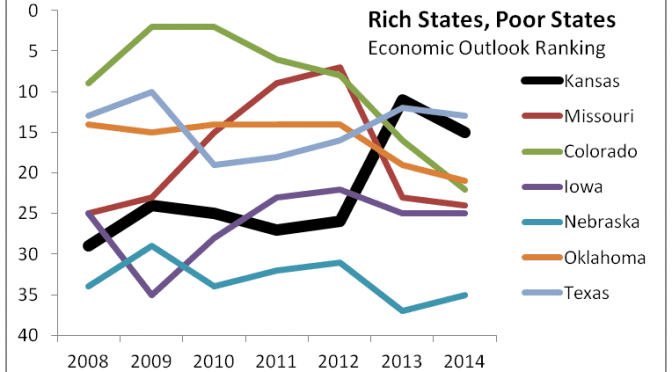
Rich States, Poor States for 2014 released
In the 2014 edition of Rich States, Poor States, Kansas continues with middle-of-the-pack performance rankings, and fell in the forward-looking forecast.
-
State financial data, an interactive presentation
Selected statistics about state finances from the United States Census Bureau are presented in an interactive visualization.
-
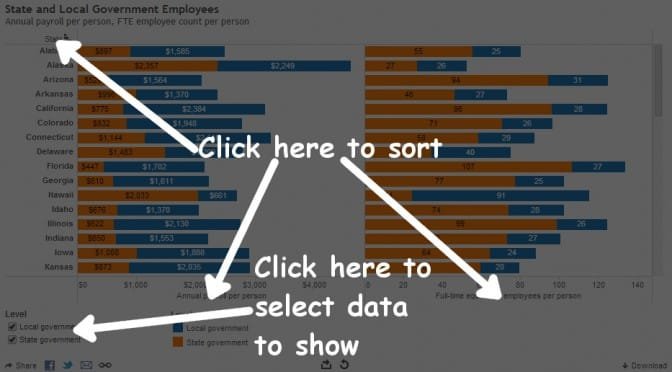
State and local government employment levels vary
The states vary widely in levels of state government and local government employees, calculated on a per-person basis.
-
In Wichita, pushing back at union protests
A Wichita automobile dealer is pushing back at a labor union that’s accusing the dealer of unfair labor practices.
-
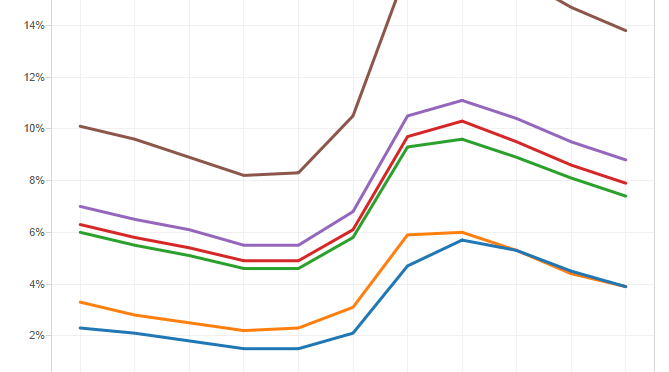
Alternative measures of unemployment
Besides the official unemployment rate that is the topic of news each month, the Bureau of Labor Statisticstracks and publishes five other series
-

Special interests defend wind subsidies at taxpayer cost
The spurious arguments made in support of the wind production tax credit shows just how difficult it is to replace cronyism with economic freedom.
-
Primary U.S. energy production by fuel source
Primary U.S. energy production by fuel source, an interactive visualization.
-

Energy subsidies for electricity production
When comparing federal subsidies for the production of electricity, it’s important to look at the subsidy values in proportion to the amount of electricity generated, because the scales vary widely.